Physical Product Report · 2026 Edition
Raising is hard.
For product founders, it’s harder.
A field guide for NZ founders raising capital for physical product businesses.
40 years of stories, a full funding pathway map, and honest advice from other founders like you. Written by Anna Guenther and Jacky Laverty.
✓ Free to download
✓ Written by Anna Guenther & Jacky Laverty
✓ 40 years of NZ product companies
✓ Every funding pathway mapped
If you’re building a physical product in Aotearoa, you’re in good company.
For forty years, Kiwi founders have turned kitchen-table ideas into world-class companies, and funded every step along the way.
Why founders struggle to raise
They chase Venture Captial too early. The startup world trains founders to see VC as the destination: angels, then seed, then Series A. But that path was designed for SaaS. VCs need 10 to 20 times their money in ten years. Your skincare brand or brewery is probably growing steadily, not exponentially, and that’s not a bad thing, just a different kind of business.
The Trilogy sisters didn’t chase VC. They grew their skincare brand, sold to Ecoya for $20 million, then sold again seven years later for $211 million. Jeremy Moon built Icebreaker on $200,000 from eight investors, mostly friends’ parents, and sold it 24 years later for $288 million. Neither story involved VC.
They don’t have a real growth plan. A good product isn’t a growth plan. Investors fund outcomes, not ideas. They want to see margins, a clear point of difference, and what specifically their money unlocks.
They can’t show a path to profit. Revenue is good, but margins and cashflow are what investors actually care about. For product businesses, this usually comes down to brand: a strong brand lets you charge more and protect your margins as you grow.
“A good product delivers a good brand, which delivers good margins, which delivers a pathway to profitability.” – Jeremy Moon, founder of Icebreaker

How to prepare before you raise
Before approaching investors, pressure-test three things: can your margins hold (or improve) at ten times your current volume, are you genuinely differentiated, and what are the actual levers that grow the business without adding cost line for line.
Then build three forecasts, not one:
- Profit & Loss, monthly, 36 months, showing a credible path to breakeven
- Balance Sheet, quarterly, 12 quarters, showing solvency, not just profitability
- Cashflow, weekly, 52 weeks, because you can be profitable on paper and still run out of cash
“Breakeven just means you’ve stopped bleeding cash. It’s the most important milestone, more than making heaps of profit.” – Jeremy Moon
Get your documents ready before you’re asked: shareholders’ agreement, cap table, IP registrations, two to three years of accounts, and a proper data room. And build your crowd before you need it. The founders who raise fastest have spent months, sometimes years, staying connected to potential investors without asking for anything.
Case studies
Four decades of product companies that built and won
Icebreaker
$25k loan for a kitchen → $288m exit
$288m
Sale price · 2018
Ethique
Bars not bottles, and a 48× return for early investors
48×
Crowd investor return
Parrotdog
$2m raised in 2 days, from people who drink their beer
$2m
Raised in 2 days
Our three founders who did it
Parrotdog started as three Matts brewing in a Wellington flat in 2011, funded by credit cards. By 2016, they chose the crowd over institutional money: they grew their investor newsletter from 800 to 4,000 subscribers, released the offer document a week early, and hit their $1.2 million minimum in 12 hours. Total raised: $2 million in two days, from 796 new shareholders who’d been drinking their beer for years.
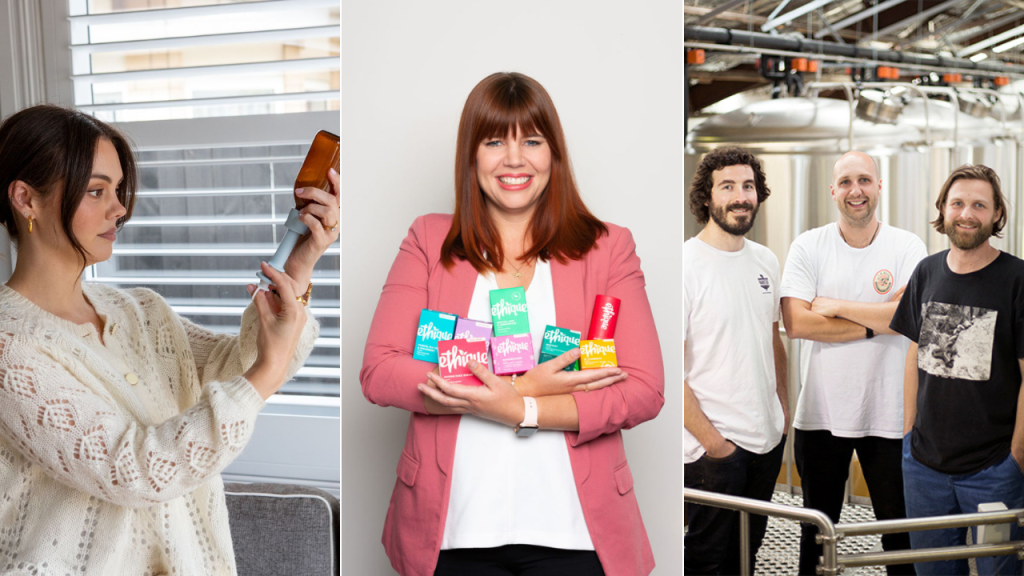
Ethique’s Brianne West started making shampoo bars in her Christchurch kitchen at 25. She didn’t launch a campaign and hope people showed up, she built her crowd first, selling at markets and on Facebook, telling the plastic-free story honestly. She raised $200,000 in two weeks, then $500,000 in 90 minutes two years later. When Ethique sold in 2020, her earliest crowdfunders saw a 48x return.
DoseBuddy’s Sasha had a sick child and a syringe with rubbed-off markings, and a question every parent has had. She built a 4,000-person waitlist before her campaign even opened, through a simple sign-up form, Meta lead ads, and honest, diary-style emails about the product’s origin. The campaign hit its goal in 3 hours and ended at 2.4 times target.
“People don’t pledge to products. They pledge to people.”
All three did the same three things: they built relationships before asking for money, they delivered on every promise, and they told the honest, unpolished version of their story rather than a corporate one.
Want the full picture?
The Physical Product Field Guide covers 40 years of NZ product companies, every funding pathway available in Aotearoa, and the honest advice most investors won’t tell you. Download it Free 👇
Want to chat about your Growth plans?
Free. No catch.
Book into our founder Anna’s calendar to chat about your plans.
And sign up to be kept in the loop on future research and opportunities for physical product founders.
Want to learn more?
🎙️ The Funding Files podcast
Hear founders tell their fundraising stories in full, including Sasha from DoseBuddy, the Parrotdog Matts, and more.
🎓 CrowdfundingU
Our six-week preparation programme for founders getting ready to raise. Practical, founder-led, and funded via the Regional Business Partner Network.
💬 Talk to us
Thinking about a raise? We’re happy to have a no-pressure conversation. Email us at contact@pledgeme.co.nz or book a call with Anna.